What Does a Mobile App Really Cost in Ghana? From GHS 5,000 to GHS 1 Million
What a mobile app really costs in Ghana in 2026, from a GHS 5,000 simple app to a GHS 1,000,000 platform, broken down by what your app actually does, plus the maintenance bill that comes after launch.
Short, honest answer? A mobile app in Ghana costs anywhere from GHS 5,000 to over GHS 1,000,000 in 2026. That range is almost comically wide, so let's make it useful, because once you see what moves the number, GHS 5,000 and GHS 1,000,000 stop sounding like the same product priced by madmen and start sounding like two completely different things that happen to share the word "app."
Here's the part most "app cost" guides won't tell you plainly, though. The price to build an app is not the price of the app. It's the down payment. For a successful app, the cheque you write to build it can turn out to be the smallest cheque you ever write for it, and we'll get to exactly why some apps cost more to keep alive each year than they ever cost to build.
But first, the number you came for.
First, what is the app actually going to do?
Forget "Android or iOS" for a second. That's not the dial that moves the price. Almost everything serious gets built cross-platform now, one codebase running on both, so that question is mostly settled before it starts.
The dial that moves the price is this: how much does your app have to do, and how much does it have to be trusted with? An app that shows your salon's services and lets someone tap to book is a weekend of work. An app that holds people's money, moves it, and has to be right every single time is a different universe of engineering, testing, and liability. Same word. Wildly different machines.
So instead of a price list, here's a ladder of ambition. Find the rung that sounds like your idea, and you'll find your number.
The price to build an app isn't the price of the app. It's the down payment.
The cedi ladder, with apps you already know
Each rung below is a real kind of app, with an example you'll recognise, and the honest cedi range to build it properly in 2026. "Properly" matters: every one of these can be done cheaper and worse, and that bill always arrives later.
GHS 5,000 – 20,000 · The simple app (the "app version of a flyer"). A booking app for a single barbershop. A church app with sermons, events, and a giving button. A gym timetable. One audience, a handful of screens, little or no logic behind it, often leaning on tools that already exist. Genuinely useful, fast to ship, and honestly the rung where most first-time ideas should start. Just know what you're getting: a neat front door, not a building.
GHS 20,000 – 60,000 · The real small-business app. A delivery app for one restaurant: menu, cart, Mobile Money checkout, an order landing in the kitchen, a rider notified. A school app where parents see fees, results, and announcements. Now there's a real backend, real accounts, real data syncing between phone and server. This is where most Ghanaian SMEs who need an app actually sit.
GHS 60,000 – 150,000 · The connected platform. A small multi-vendor ordering app, a "Bolt Food for one neighbourhood": many restaurants, many riders, live order status, payouts to split, Mobile Money and Paystack payments wired in and reconciled. Two or three apps really (customer, vendor, admin) wearing one brand. The cost lives in the coordination, not the prettiness.
GHS 150,000 – 400,000 · The serious product. A fintech wallet. A logistics app with live GPS tracking and proof-of-delivery. A lending app that scores and disburses. Here you're paying for things customers never see: security audits, fraud handling, uptime, the boring machinery that has to never fail because it's holding money or moving goods. Get this rung wrong and it doesn't cost you cedis, it costs you trust.
GHS 400,000 – 1,000,000+ · The platform at scale. A national ride-hailing app. A payments super-app. A product meant for hundreds of thousands, then millions, of users. At this rung the build itself is almost the easy part to budget for. What you're really signing up for is everything after launch, which is the whole point of this article.
Notice what's happening as you climb. The screens don't get a hundred times more beautiful. The responsibility gets a hundred times heavier. You're not paying for more buttons. You're paying for the app to be trusted with more, by more people, more of the time.
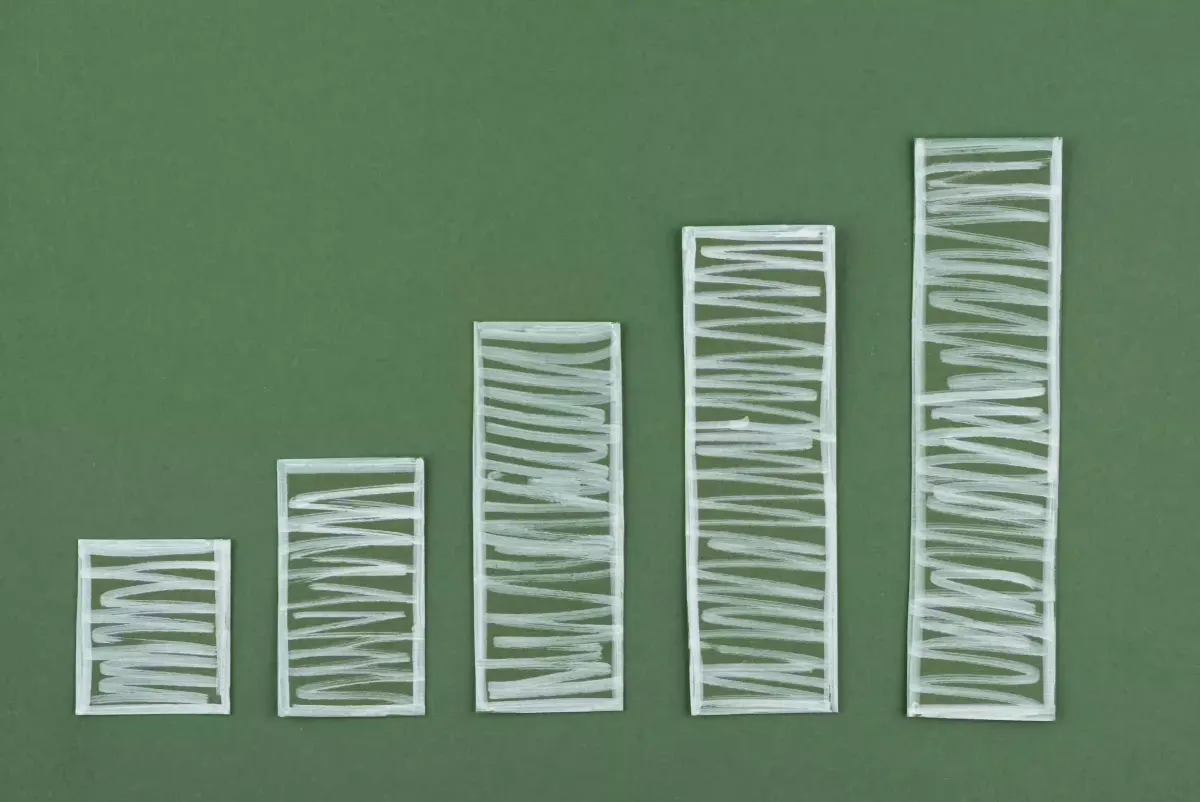
What a mobile app costs scales with complexity — from a simple booking app to a full payments platform.
If you've read what a website costs in Ghana, you'll recognise the shape of this: a huge range that only makes sense once you stop treating one word as one product. The difference is that with apps, the second half of the cost story is the part nobody quotes you for.
The bill that comes after: why some apps cost more to keep alive than to build
Here's the thing a website mostly lets you get away with that an app does not: standing still. A brochure website can sit untouched for two years and still work fine. An app cannot. It's living on a device that updates twice a year, in stores that change their rules, talking to a backend that has to stay up, used by people who will tell you instantly when something breaks.
So an app has a second price tag, and it renews every year:
It rots if you leave it. iOS and Android push major updates yearly. Leave an app untended and a system update can simply break it, or the store can pull it for being out of date. Industry-wide, app maintenance runs roughly 15% to 50% of the build cost, per year, heaviest in year one. A GHS 60,000 app can quietly carry a GHS 12,000–25,000 annual upkeep bill before you've added a single feature.
Servers cost money to keep running, and more money when you succeed. Ten users cost almost nothing to host. A hundred thousand active users hitting your backend every evening is a real monthly infrastructure bill, and it grows with you. Success is not free. This is the cruel twist: the better your app does, the more it costs to run.
At true scale, running it dwarfs building it. This is the number that shocks founders. A product serving millions of users can spend the equivalent of hundreds of thousands of cedis a year just staying alive: cloud infrastructure, round-the-clock monitoring, on-call engineers, security audits, fraud teams, customer support. A team can spend GHS 600,000 building an app and then spend more than that every year keeping it fast, safe, and online. The build was the cheap part.
People are a recurring cost too. A live app generates support tickets, store reviews to answer, fraud to chase, small fixes weekly. That's a person, or several. The bigger the app, the more of your bill is salaries, not code.
This is why a serious app is a commitment, not a purchase. The right way to think about it: the build is what gets you to the start line. The annual cost is what keeps you in the race. If you can't fund the second one, the first one is wasted money, because an abandoned app is worse than no app, it actively tells your customers you quit.
The build is the tip above the water; hosting, updates, security and support are the mass below it.
"Do you even need an app?"
Now the question that can save you the entire bill above. Plenty of businesses that ask us for an app don't need one yet, and a good partner will tell you so.
An app earns its place on someone's home screen only when a website can't do the job: when people use it often, on the move, needing speed, notifications, the camera, GPS, or offline access. A delivery rider needs an app. A boutique that gets orders twice a day does not, it needs a fast site and a WhatsApp number. If your "app idea" is really a catalogue people would visit once a month, a sharp website is cheaper to build, far cheaper to run, and visible on Google in a way an app never will be.
Sometimes the honest answer isn't even "build." It's the same question we draw out in deciding whether to build it custom or rent something off the shelf: an existing platform might do 90% of what you want for a monthly fee, with none of the maintenance falling on you. That's not us talking ourselves out of work. It's the difference between a partner and a vendor.
How long does a mobile app take in Ghana?
It tracks the same ladder. A simple app on the bottom rung can be ready in 2 to 4 weeks. A real small-business app with a proper backend runs 6 to 12 weeks. A connected platform or a fintech-grade product is measured in months, sometimes the better part of a year, because the testing and security work can't be rushed without becoming the expensive kind of "fast." As with most builds, the biggest delay is usually how quickly you make decisions and supply content, not how fast the code is written.
So what should you actually budget?
Bring it together and it's simple. Match the rung to what your app has to be trusted with, and budget for the year, not just the build:
Testing an idea, or a simple tool for one audience? GHS 5,000 – 20,000 to build. Start here, prove people want it, then grow. Don't over-engineer a guess.
A real app your business will run on day to day? GHS 20,000 – 150,000 to build, plus a genuine yearly upkeep line. This is where most Ghanaian businesses that truly need an app should plan to be.
A product holding money, or aiming for serious scale? GHS 150,000 to GHS 1,000,000+ to build, and a running cost that can match or exceed it every year. Don't start this one unless you can fund the years after launch, not just the launch.
The "right" price was never the lowest quote. It's the one that matches what the app has to do, built by someone who'll be there when iOS 27 lands and something breaks at 9pm before your big campaign. A GHS 8,000 app you abandon in eight months is expensive. A GHS 200,000 app that funds its own upkeep and grows with you is cheap.
Rather than guess your rung, tell us what you're building and we'll scope it honestly: the build, the realistic yearly cost, and a straight answer on whether an app is even the right move for you. If it isn't, we'll tell you that, and if you'd rather just talk it through first, message us on WhatsApp and we'll point you the right way, even if it's not us you end up working with. That's the whole of our mobile app development approach: build only what earns its place on the phone, then keep it alive.
Key takeaways
A mobile app in Ghana in 2026 ranges from GHS 5,000 to GHS 1,000,000+, driven by what the app does and how much it's trusted with, not by Android-vs-iOS.
The build price is a down payment, not the price. Plan for the years after launch from day one.
Maintenance runs roughly 15–50% of build cost per year, and at scale, running a popular app can cost more annually than building it ever did.
The cruel twist: the more successful your app, the more it costs to keep running. Success is not free.
Before you build, ask if you even need an app, often a fast website or WhatsApp does the job cheaper and stays visible on Google.
Don't start a high rung you can't fund past launch. An abandoned app is worse than no app.
Discussion
0 comments
No comments yet. Be the first to share your thoughts.
Leave a comment
Thanks — your comment is awaiting moderation.
It will appear here once a member of our team approves it.
What a website really costs in Ghana in 2026, broken down by the type of site you are buying and the tier of person who builds it, from a student to a full agency, plus the running costs no quote mentions.
Off-the-shelf or custom? For a growing Ghanaian business, choosing wrong in either direction is expensive. An honest comparison of cost, fit, ownership, and ROI — with a decision matrix and the signals that mean it is time to build.




Discussion
0 comments
No comments yet. Be the first to share your thoughts.
Leave a comment
Thanks — your comment is awaiting moderation.
It will appear here once a member of our team approves it.